


Food service businesses are under growing pressure to reduce waste and make more sustainable packaging choices. But sustainable food packaging must still perform well for hot food, greasy items, drinks and liquids, dine-in service, and delivery.
Whether you run a café, restaurant, quick service restaurant, or catering operation, choosing the right sustainable food packaging starts with understanding which materials, disposal pathways, and product formats best suit your needs.
What is sustainable food packaging?
Sustainable food packaging has been specially designed to reduce environmental impact across its lifecycle, from material composition to end-of-life pathways. Key considerations of sustainable packaging include:
- Where materials come from,
- Whether it can be recycled or composted,
- Whether it protects food effectively and reduces food waste, and
- If it suits the venue’s actual waste system.
Recyclable vs compostable vs biodegradable: what’s the difference?
The terms recyclable, compostable, and biodegradable are often used interchangeably when discussing sustainable food packaging, but they describe very different disposal pathways:
- Recyclable packaging is designed to be collected, processed, and turned into new materials, minimising the amount of waste sent to landfill.
- Compostable packaging breaks down into organic matter under the right composting conditions, whether that be in home composting systems or commercial setups.
- Biodegradable packaging can break down over time through natural processes, although the term doesn’t always explain how long the process takes, the conditions required, or whether the packaging is suitable for composting or recycling.
Understanding compostable packaging (home vs commercial composting)
Compostable packaging requires specific conditions to break down effectively, which can be achieved either in a home compost or at a commercial composting facility:
- Home compostable items are designed to break down in a home compost environment, like a compost bin or tumbler, though timeframes and conditions vary.
- Commercially compostable packaging requires strictly controlled composting conditions, such as higher temperatures and managed processing facilities.
Compostable food packaging should carry either home or commercial composting certifications so you know how to dispose of it correctly.
Choosing sustainable takeaway packaging by use case
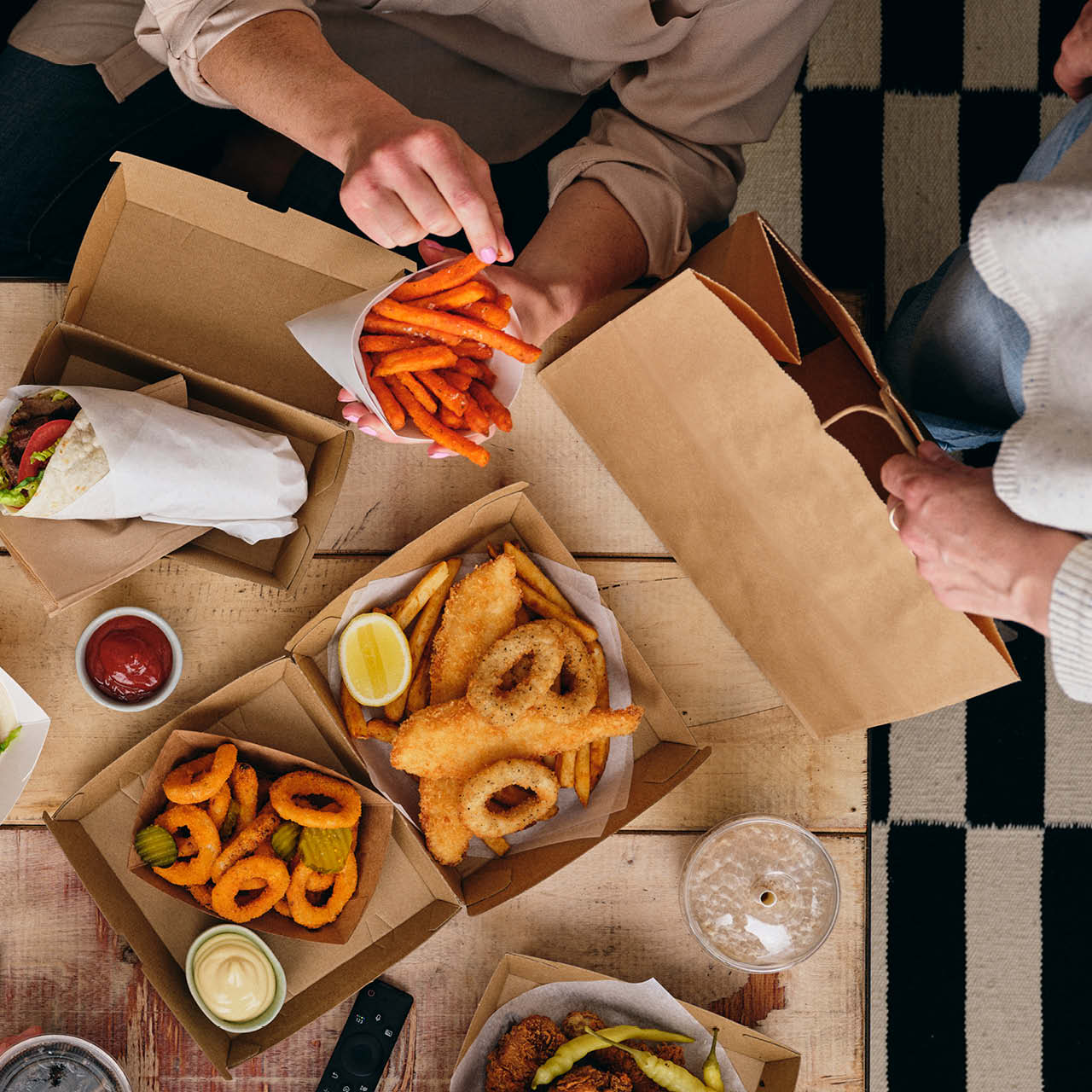
Hot food and meals
Packaging for hot food needs to handle heat retention, moisture, sauces, and oils. When choosing packaging options for hot food, be sure to consider:
- Whether the meal is eaten immediately or delivered,
- Ventilation vs heat retention,
- Leak resistance, and
- Stackability and presentation.
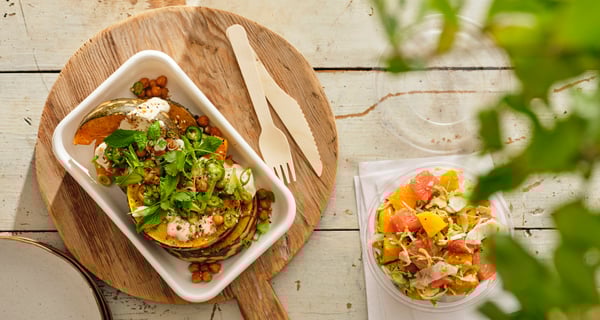
For hot meals, curries, burgers, pasta, and grab-and-go options, choosing the right cartons and trays can help balance food protection, presentation, and sustainability.
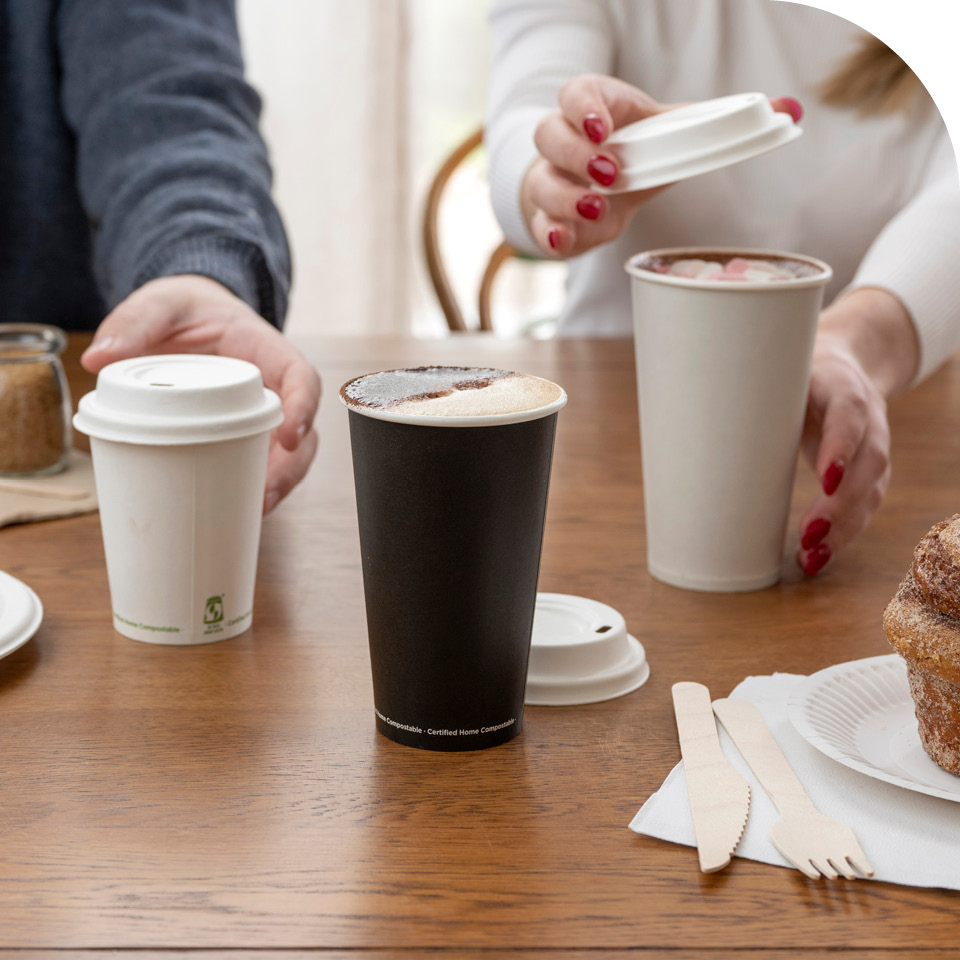
Drinks and Beverages
Beverage packaging needs to account for:
- Hot vs cold drinks,
- Lid compatibility,
- Insulation and handling comfort, and
- Condensation and takeaway travel.
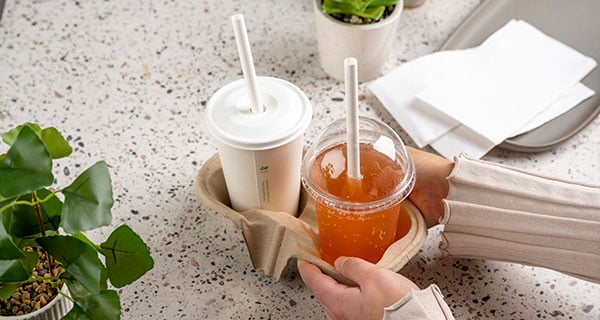
For coffee, smoothies, and cold drinks, it helps to explore cups and cup accessories together so the cup, lid, and any add-ons support both performance and disposal goals.
Dine-in and serving
For dine-in, events, or quick-service environments, you might need to choose lighter-weight packaging solutions that still suit your sustainability goals. It’s not uncommon for bowls, plates, and cutlery to each have their own disposal pathways, which is why consistency matters.
Be sure to consider:
- Portion type,
- Wet vs dry food,
- Cutlery needs, and
- Whether the venue uses back-of-house composting or recycling systems.
Matching your plates, bowls, and cutlery to your menu and waste setup can make service smoother and disposal clearer.
Carrying and delivery
Bags continue to play an important role in takeaway and food delivery, often influencing whether packaging arrives upright and intact. If this applies to your food business, it’s essential to consider:
- Weight capacity,
- Grease or moisture resistance,
- Whether multiple items need to be carried together, and
- Branding and customer experience.
The right bags can support safe transport, customer convenience, and a more considered packaging system overall.


How to make the switch to sustainable food packaging
1. Audit what you currently use
List your current packaging items across food, drinks, dine-in, and takeaway, paying close attention to your high-volume items.
2. Match packaging to menu needs
Review heat, moisture, grease, transport, and shelf-life requirements. Avoid choosing packaging purely on sustainability claims if it won’t perform the way you need it to.
3. Check the disposal pathway
Where is the packaging most likely to end up out of kerbside recycling, commercial organics collection, and general waste? Choose packaging formats that align with the real-world disposal option.
4. Look for clear certifications and material information
Look for information on recyclability, compostability, responsible fibre sourcing, and any relevant standards or certifications. Check whether the packaging claims are credible and align with the relevant standards and labelling systems.
5. Trial before rolling out
Test the packaging with actual menu items for leaks, heat retention, lid fit, stacking, and customer usability. Feedback from staff and customers can help to shape your choice of packaging to provide the best possible experience.
FAQs about sustainable food packaging
What is considered sustainable food packaging?
Sustainable food packaging is specially designed to reduce environmental impact through considered material choice, functionality, and disposal pathways.
Is compostable packaging better than recyclable packaging?
Not always. Ultimately, the choice between compostable and recyclable packaging depends on the waste infrastructure available to your business and your customers.
How do I choose sustainable takeaway packaging for my café or restaurant?
When choosing sustainable takeaway packaging for your food service business, be sure to consider your menu, food temperature, delivery needs, disposal systems, and packaging certifications (e.g. recyclable vs. compostable). By taking a holistic approach to your food packaging, you’ll be better positioned to make a choice that best suits your needs.
Embrace sustainable food packaging with Detpak
Sustainable food packaging is more than just replacing one material with another. The right solution depends on your menu, service model, customer needs, and available disposal pathways.
Ready to take a step towards more sustainable food packaging? Explore Detpak’s range of sustainable packaging solutions across cartons and trays, cups, dine-in essentials, and bags to find options that suit your business.