


Fresh produce packaging plays a critical role in protecting fruit and vegetables from farm to shelf, preserving freshness, reducing waste, and enhancing shelf appeal. With increasing pressure from retailers, regulators, and consumers, choosing the right packaging has never been more important.
So, what is the best packaging for fresh produce? Today, the answer goes beyond materials alone. The best solution is fibre-based, including paperboard, cardboard, and sugarcane, offering recyclable or compostable alternatives to plastic, and custom-designed to suit your produce, supply chain, and brand. This guide explores what that means in practice and how Detpak supports growers, vendors, and retailers with bespoke fresh produce packaging solutions, specialising in paperboard and cardboard.
What “best” really means in fresh produce packaging
The best packaging for fresh produce is not one-size-fits-all. It must be designed around the specific requirements of the fruit or vegetables being packed, as well as how they move through the supply chain. At Detpak, this means developing bespoke fibre-based packaging solutions that are engineered specifically for the characteristics of each fruit or vegetable, rather than relying on standard, one-size-fits-all formats. While several fibre materials are available in the market, Detpak’s core capability lies in paperboard and cardboard, where it can truly design, innovate, test, and optimise performance. That said, several key criteria are worth considering when selecting your packaging, including:
- Product protection: Strength, rigidity, ventilation, and resistance to bruising.
- Food safety and compliance: Materials suitable for direct food contact and chilled storage.
- Shelf life and freshness: Ventilation, barrier properties, and moisture control.
- Product visibility and merchandising: Clarity, brandability, and custom printing options.
- Convenience and efficiency: Suitability for packing lines, transport, and retail.
- Sustainability: Fibre-based materials that are kerbside recyclable or certified compostable and aligned with evolving regulations.
At Detpak, these criteria guide the development of R&D-led, paperboard and cardboard solutions that perform as well as traditional plastic, without the environmental trade-offs.
Comparing key fresh produce packaging materials.
Fresh produce packaging increasingly relies on fibre-based materials, with paperboard, cardboard, and sugarcane fibre among the most common options. While all offer sustainability advantages over plastic, their performance, availability, and role within a circular economy differ.
Cardboard & paperboard solutions
Paperboard and cardboard are Detpak’s core speciality, offering the greatest opportunity for custom design, innovation, and circularity.
Made from responsibly sourced wood pulp, these materials are:
- Designed for kerbside recyclability, supporting a circular economy
- Highly versatile across a wide range of produce types
- Suitable for both lightweight and delicate items, as well as bulk and high-volume applications
- Ideal for custom structural design, ventilation control, and premium branding
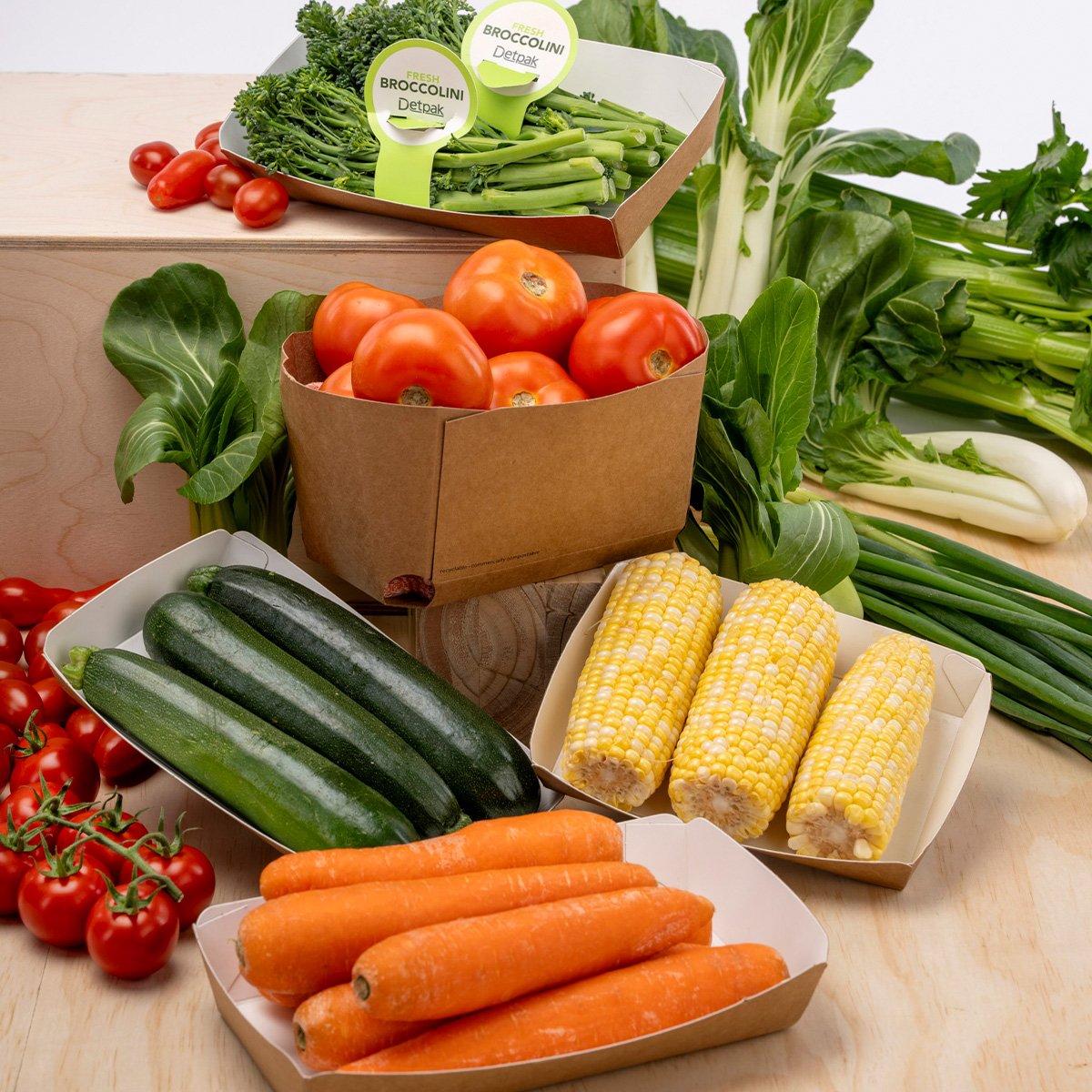
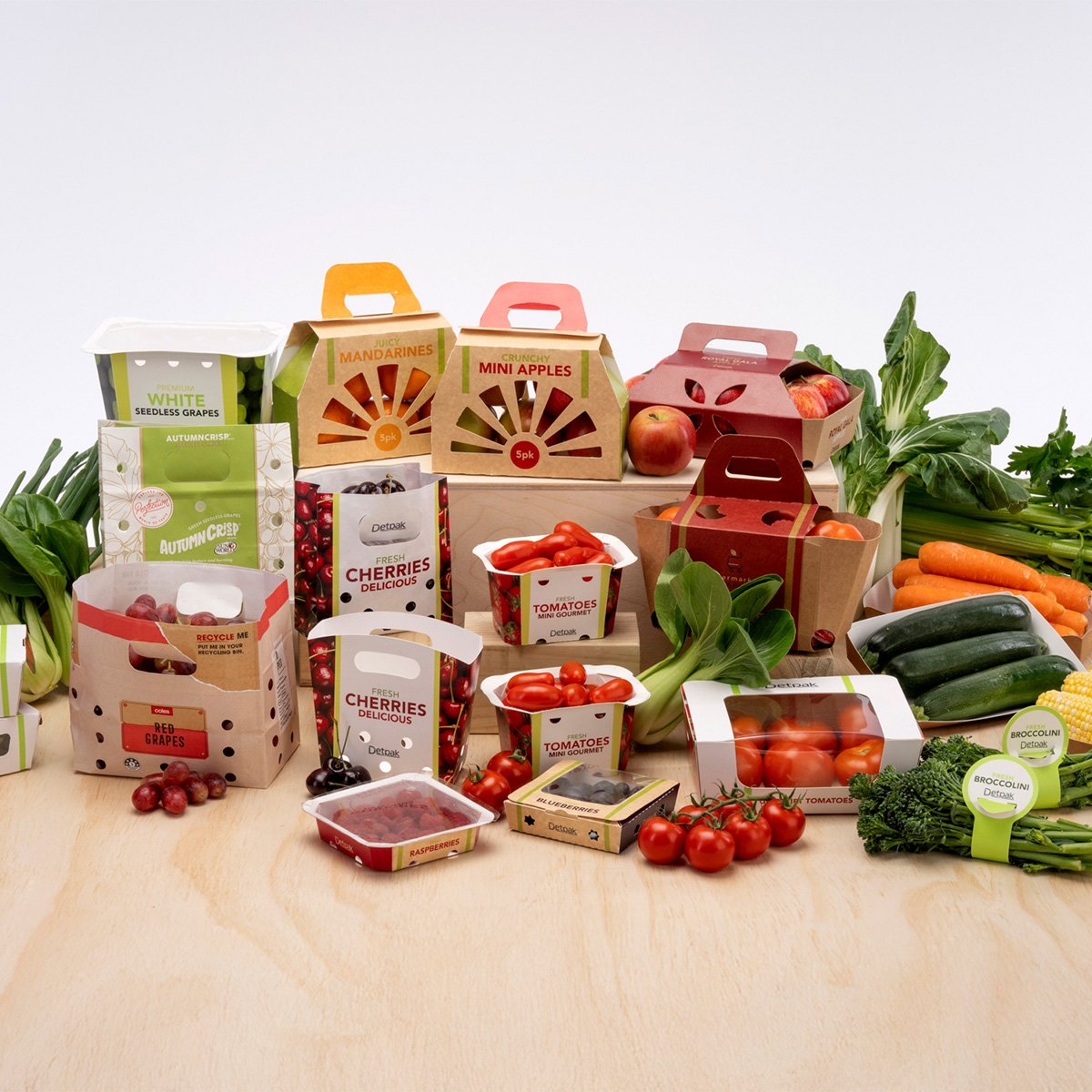
Modern paperboard and cardboard solutions are now widely used for berries, grapes, cherry tomatoes, citrus, apples, potatoes, and value-added produce, supported by advances in fibre engineering and barrier technologies.
For businesses prioritising recyclability, APCO alignment, and scalable innovation, paperboard and cardboard offer unmatched flexibility and long-term sustainability outcomes.
Sugarcane fibre solutions
Sugarcane (bagasse) is a rapidly renewable fibre and a popular choice for fresh produce packaging. A byproduct of the sugar industry, it offers strong sustainability credentials while delivering excellent functional performance.
Sugarcane packaging offers a range of other advantages, including:
- Compostability (where certified)
- Moisture resistance
- Strength and durability for chilled environments
- Lightweight
Sugarcane fibre solutions are well-suited to delicate produce such as berries, tomatoes, and stone fruit, particularly when designed with ventilation and moisture control in mind.
Fibre-based innovation for performance-critical applications
Advances in fibre engineering and barrier technologies mean that modern fibre-based packaging can now deliver moisture resistance and shelf-life performance comparable to plastic.
Detpak’s fibre-based solutions are rigorously tested for refrigeration, transport, and retail handling, ensuring they meet the practical demands of fresh produce while significantly reducing plastic use.
Choosing the right packaging for different types of produce
The best fresh produce packaging is custom-designed to suit the characteristics of the produce and how it is packed, transported, and sold.
Here’s a quick breakdown of the different types of fresh produce packaging supplies that work for loose produce, pre-packaged items, and pre-cut fruit or vegetables.
| Produce Type | Best Packaging Formats | Why These Formats Work | Ideal For |
| Loose Produce |
|
|
Apples, citrus, stone fruit, avocados, carrots, onions, potatoes |
| Pre-Packed Produce |
|
|
Berries, tomatoes, grapes, mushrooms, snacking vegetables, fruit snacks |
| Pre-Cut / Prepared Produce |
|
|
Pre-cut fruit cups, melon pieces, salad mixes, meal kits, sliced vegetables |
FAQs
What is the best packaging for fresh produce?
The best packaging is fibre-based and custom-designed to suit the produce, supply chain, and sustainability goals of the business.
Paperboard and cardboard packaging are increasingly preferred because they:
- Support a circular economy through kerbside recyclability
- Can be engineered with ventilation, strength, and barrier properties
- Offer flexibility across a wide range of produce types
- Align with APCO and retailer sustainability targets
While compostable materials such as sugarcane have a role in specific applications, recyclable paperboard and cardboard solutions enable multiple recovery cycles, making them a key focus for long-term sustainability.
What types of fruit packaging boxes are best for retail supply?
Fruit packaging for retail supply needs to balance product protection, shelf presentation, and sustainability. The most effective solutions are retail‑ready, fibre‑based cartons designed to move efficiently from distribution to in‑store display.
Common retail fruit packaging formats include:
- Retail‑ready cardboard cartons that transition easily from transport to shelf
- Lightweight fibre‑based trays and boxes designed for easy handling and visual appeal
- Ventilated cartons that support airflow and help maintain fruit quality
- Custom packaging designs aligned to retailer specifications, branding, and packing line requirements
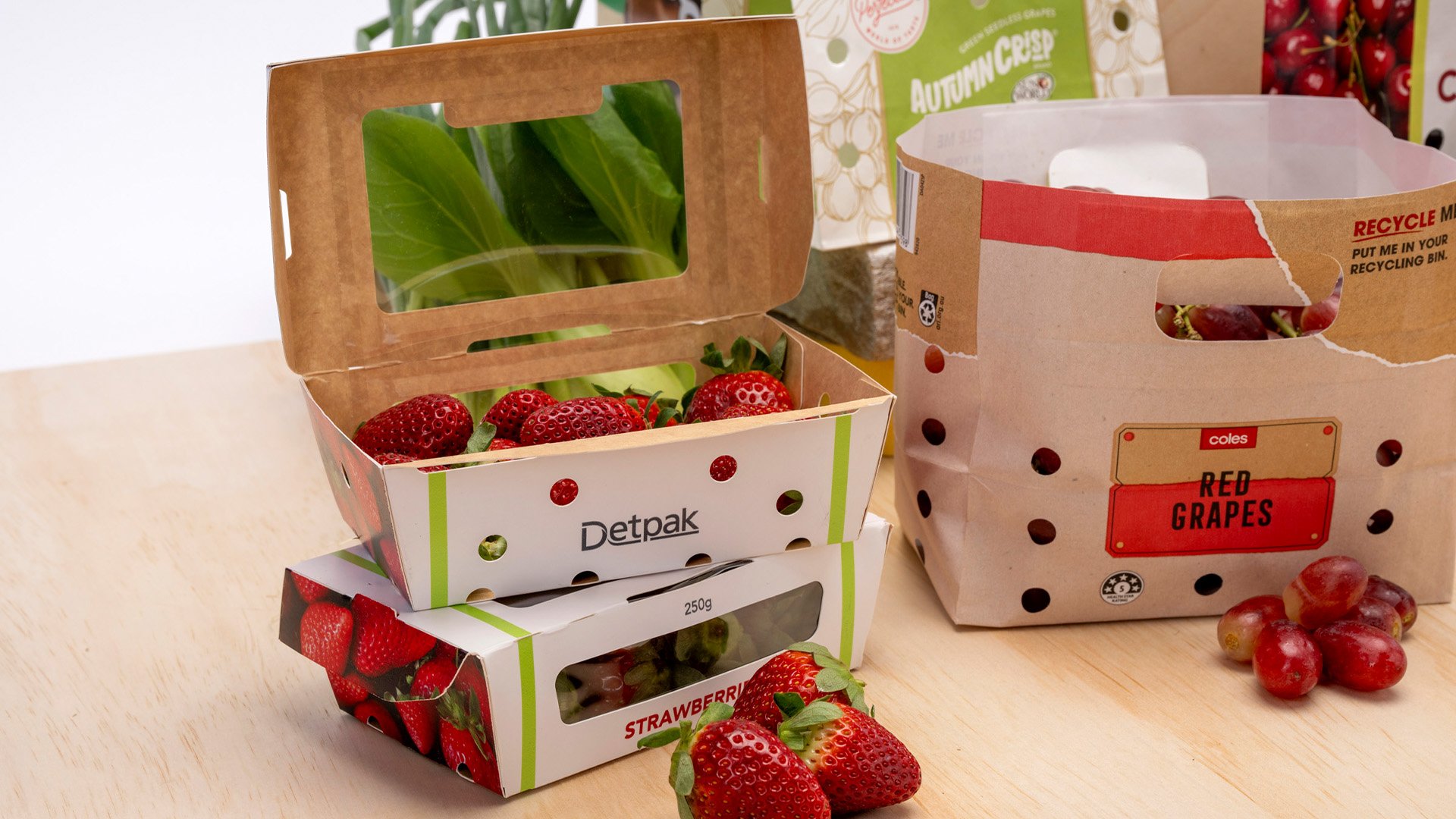
Detpak specialises in bespoke retail fruit packaging solutions that combine strength, functionality, and recyclability—supporting supermarkets, greengrocers, and fresh produce brands with packaging designed for in‑store performance.
What are the most sustainable fresh produce packaging options?
The most sustainable packaging solutions typically include:
- Paperboard and cardboard trays (recyclable, responsibly sourced).
- Sugarcane trays (renewable fibre, compostable options).
The best packaging depends on the type of produce, supply chain conditions, and your business's sustainability goals. Detpak designs, manufactures, and supplies a wide range of fresh produce packaging solutions for grocery and convenience stores, including bespoke cartons, punnets, rewind bags, and market trays, as well as offering custom print food packaging. Have striked through sugarcane as we only source, we do not design and manufacture.
Explore our fresh produce range or get in touch with Detpak to make your sustainable packaging goals a reality.